
News Center
Worthy AeroTech Raises Tens of Millions of Yuan in Seed Funding for Hydrogen-Turbine Range-Extended Fully Tilting eVTOL
Hydrogen should ultimately become the definitive energy source for aircraft.
Hydrogen should ultimately become the definitive energy source for aircraft.
Worthy AeroTech has completed a seed financing round of tens of millions of yuan, exclusively invested by CMBC International. The funding will be used for core technology R&D, team expansion, prototype flight testing and airworthiness advancement, commercialization scenarios, and market development.
Worthy AeroTech is a technology company engaged in the overall design, core components, R&D, production, and manufacturing of aircraft, as well as aircraft operations and VTOL infrastructure operations. As the world’s first hydrogen-turbine hybrid eVTOL R&D company, Worthy AeroTech was founded by talent from aerospace institutions including Tsinghua University, Beihang University, Nanjing University of Aeronautics and Astronautics, Harbin Institute of Technology, and Northwestern Polytechnical University, together with senior experts from national aerospace and aviation teams such as CASC, CASIC, and AVIC.
Founder Zhang Xin graduated from the helicopter department of Nanjing University of Aeronautics and Astronautics, the only helicopter program in China with complete bachelor’s, master’s, and doctoral training qualifications. His field of study was flight dynamics and control. After graduation, he joined an institute under the Third Academy of CASIC, where he worked for seven years and was exceptionally promoted to senior engineer at the age of 29, the only person in the institute to receive that promotion that year.
Over 17 years of study and work, Zhang Xin has remained deeply rooted in aircraft design. The projects he participated in ranged from 400 kg autogyros to 11-ton helicopters, and from solar-powered crewed aircraft to hypersonic aircraft, covering almost the entire spectrum of aircraft categories.
In 2022, Zhang Xin left the aerospace system and joined Tsinghua University’s Spray Combustion and Propulsion Laboratory, where he worked for three years. That experience brought him back into contact with vertical takeoff and landing aircraft and gave him the call to start a company.
“I studied helicopters for seven years and worked on fixed-wing aircraft for another ten. Electric vertical takeoff and landing aircraft are exactly where the two meet.” At the end of 2024, Zhang Xin wrote a long research report that confirmed his entrepreneurial direction: not short-range pure electric aircraft, but long-endurance hydrogen-hybrid eVTOL. In March 2025, Worthy AeroTech was officially founded.
From national top-level design to local implementation policies, from intensive capital investment to technology giants entering the field, eVTOL has become another trillion-yuan track with strong certainty after new energy vehicles.
Morgan Stanley predicts that the global eVTOL market will reach USD 45 billion by 2030, with China accounting for about USD 20 billion; by 2035, the global market is expected to exceed USD 225 billion. Multiple reports and consultancies believe China will become one of the fastest-growing and largest single markets for eVTOL globally, with China’s eVTOL market expected to exceed RMB 600 billion by 2035. Yet beneath the excitement, the industry faces a critical problem: most pure-electric eVTOL aircraft cannot fly far enough, cost too much to operate, and struggle to make money.
In the early stage of the company, Worthy AeroTech went through intense debate over its technical route. “At first, we considered whether to benchmark and optimize the configurations of overseas star companies,” Zhang Xin recalled. The team spent three to four months conducting intensive analysis across technology, patents, supply chain, and cost, before reaching a conclusion: there was no need to imitate, and they could not imitate. “China has its own supply chain advantages. Our team has more than a decade of engineering experience, and we are backed by Tsinghua laboratory support. We are fully capable of creating an original configuration. We can avoid patent risks, optimize performance, and build our own brand.” That decision to abandon imitation directly shaped Worthy AeroTech’s core differentiation today: not pure electric, but hydrogen-turbine hybrid; not a conventional multirotor, but fully tilting vector propulsion; not short-range test flights, but 1,000 km long-endurance commercialization. Worthy AeroTech ultimately chose a hydrogen-turbine fully tilting rotor configuration. Its target product is an eVTOL aircraft with a takeoff weight of 2.5 tons, a range of more than 1,000 km, a cruise speed of 324-350 km/h, comparable to the top speed of high-speed rail, and a payload of around 500 kg. Compared with the 200-250 km range of mainstream eVTOL aircraft on the market, Worthy AeroTech’s product expands the operating radius by more than four times. Long endurance is its core weapon. Why hydrogen? Zhang Xin gave a very engineering-minded answer: energy density decides everything.
“One kilogram of hydrogen can generate 32-33 kWh of electricity, while one kilogram of lithium battery provides only 0.25-0.3 kWh. The difference is about 100 times. This cannot be fixed by engineering optimization; it is determined by physical properties,” he said. Higher energy density means longer range, fewer refueling cycles, and higher aircraft utilization. Zhang Xin ran the numbers: a typical pure-electric eVTOL has a design range of 250 km, but after accounting for civil aviation safety reserves for emergency landing and diversion, as well as insufficient power output when battery voltage drops, only 50%-60% of the battery capacity is truly usable. The real usable range is only 150-160 km. By contrast, Worthy AeroTech’s thousand-kilometer-class range can still deliver an operating radius of more than 800 km even after deducting reserves. In terms of unit cost, Worthy AeroTech’s product can bring per-seat, per-kilometer cost to half or even less than that of short-endurance eVTOL aircraft, comparable to business ride-hailing vehicles or even standard ride-hailing services. Of course, hydrogen also brings additional engineering challenges, such as high-pressure hydrogen storage and thermal management. Worthy AeroTech’s solution is to independently develop a complete hydrogen-turbine power generation system and use waste heat from turbine power generation to heat and gasify hydrogen fuel, forming a complete energy-efficiency loop. Zhang Xin believes that with national policy support and supply-chain maturation, the cost of industrial by-product hydrogen has dropped to around RMB 10 per kilogram, comparable to fossil fuels. In the next two to three years, the cost of green hydrogen is also expected to reach the same level. “Hydrogen should ultimately become the definitive energy source for aircraft.”
Worthy AeroTech’s R&D path follows a typical aviation engineering route: from small to large, gradually releasing risk and progressing step by step. The company has planned a sequence of scaled prototypes from 1:8, 1:4, and 1:2 to a full-size 1:1 aircraft. The 1:8 prototype has already completed more than 1,000 flight tests, focusing on flight-control algorithms and fault reconstruction capability, meaning the aircraft can still take off and land safely when one or two of its six rotors lose power. Zhang Xin said that during flight tests, the team encountered various small issues, including resonance caused by blade rotation frequency overlapping with airframe vibration points and a propulsion unit rotating unexpectedly due to ground power abnormalities. These issues were solved one by one through flight-control filtering optimization and control-logic improvements. The 1:4 prototype went a step further and was developed into WorthyAero R1, a single-seat ultralight sport aircraft. Because its size and weight meet regulatory requirements, the product does not need to go through complex airworthiness certification in China, the United States, or Europe, and can be commercialized directly.
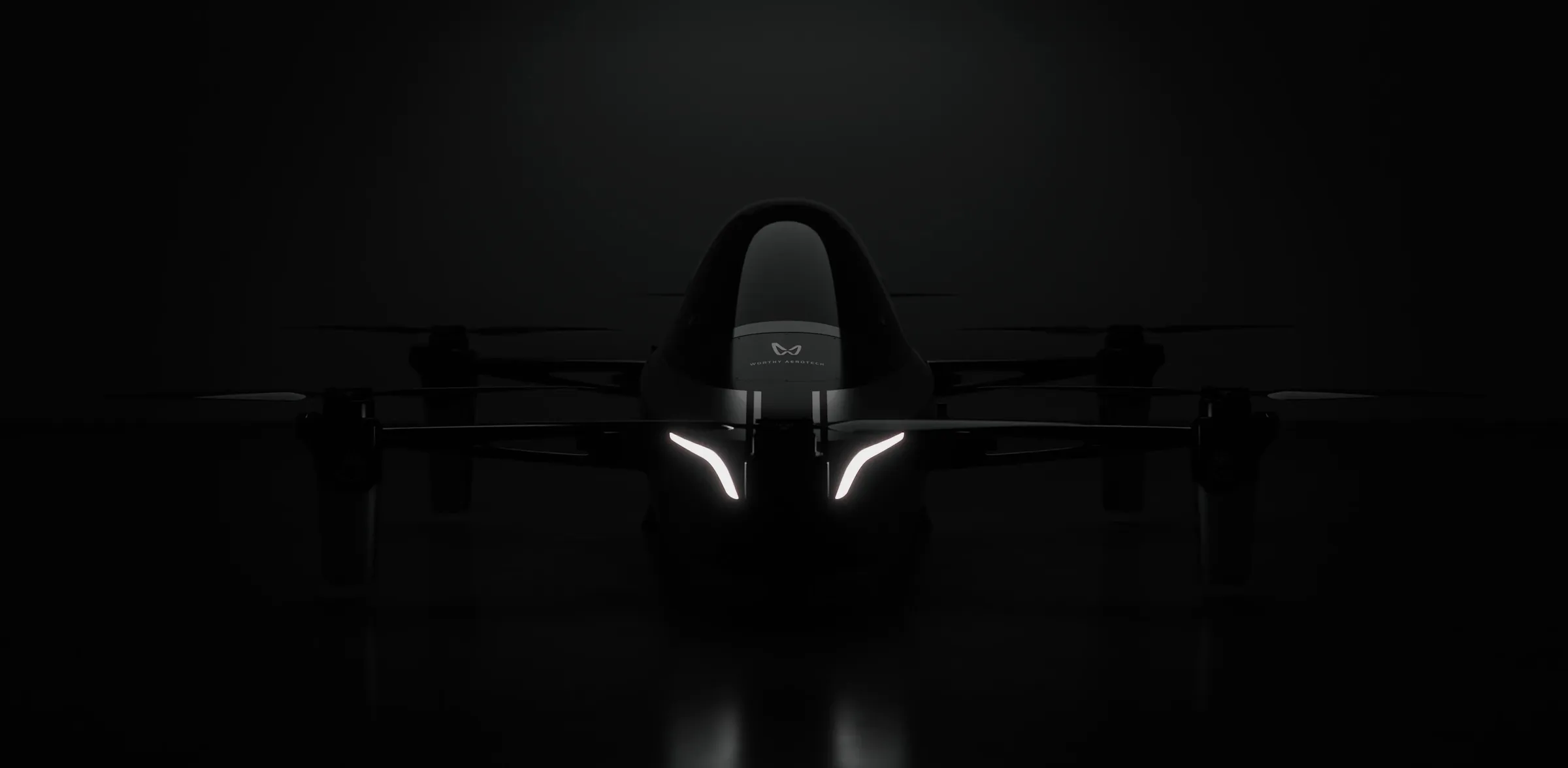
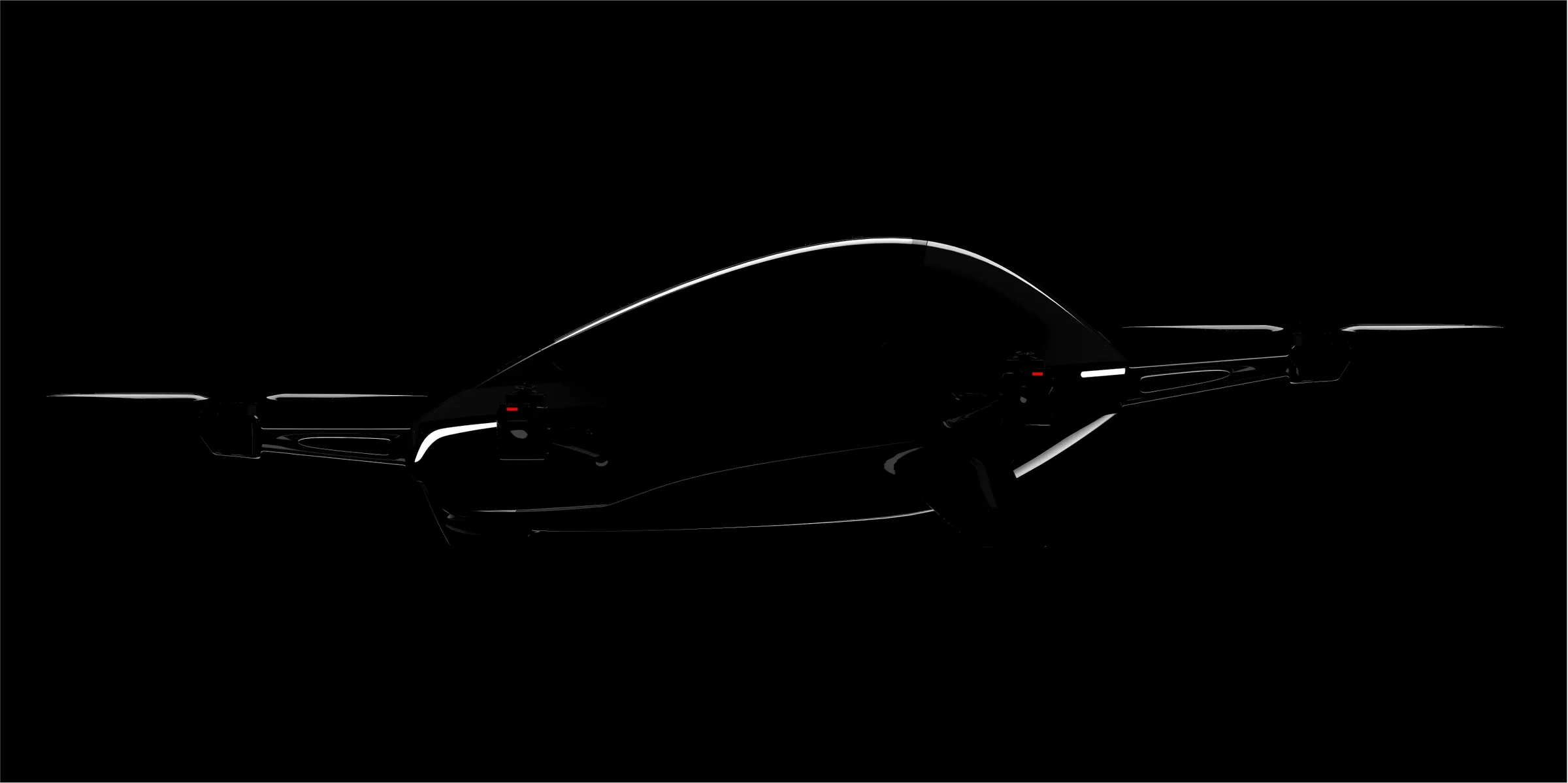
This small aircraft has already brought Worthy AeroTech its earliest revenue. The company has reportedly received several dozen intended orders from cultural tourism companies and high-net-worth individuals in Hainan, Canada, Russia, and other regions, with customers in several other countries also actively moving forward. In 2026, this product line alone is expected to generate tens of millions of yuan in sales revenue. “Technical feasibility does not equal airworthiness approval, and airworthiness approval does not equal a commercial loop. The low-altitude economy will ultimately not be judged by who flies first, but by who can form a real economic loop,” Zhang Xin emphasized. Unlike most eVTOL companies that focus on air taxis, Worthy AeroTech’s 2.5-ton target product is aimed more at intercity air transportation, especially areas that high-speed rail and civil aviation do not cover and where cars take too long. “We will prioritize demonstration applications in cargo transport, such as remote areas without runways, energy and mining regions, and offshore platforms,” Zhang Xin said. These scenarios share common characteristics: long distances, inconvenient transportation, and high time sensitivity. For passenger transport, Worthy AeroTech will gradually enter scenarios such as emergency medical services and high-end cultural tourism, before ultimately enabling intercity passenger transportation. At present, the ultralight single-seat aircraft WorthyAero R1 has achieved commercialization; it is expected to generate tens of millions of yuan in sales revenue in 2026. The 1:2 scaled prototype is expected to be completed in 2026 and obtain airworthiness certification in 2027. The 2.5-ton cargo airworthiness certification aircraft is planned to be launched between 2027 and 2028.